Whip Shading, Explained
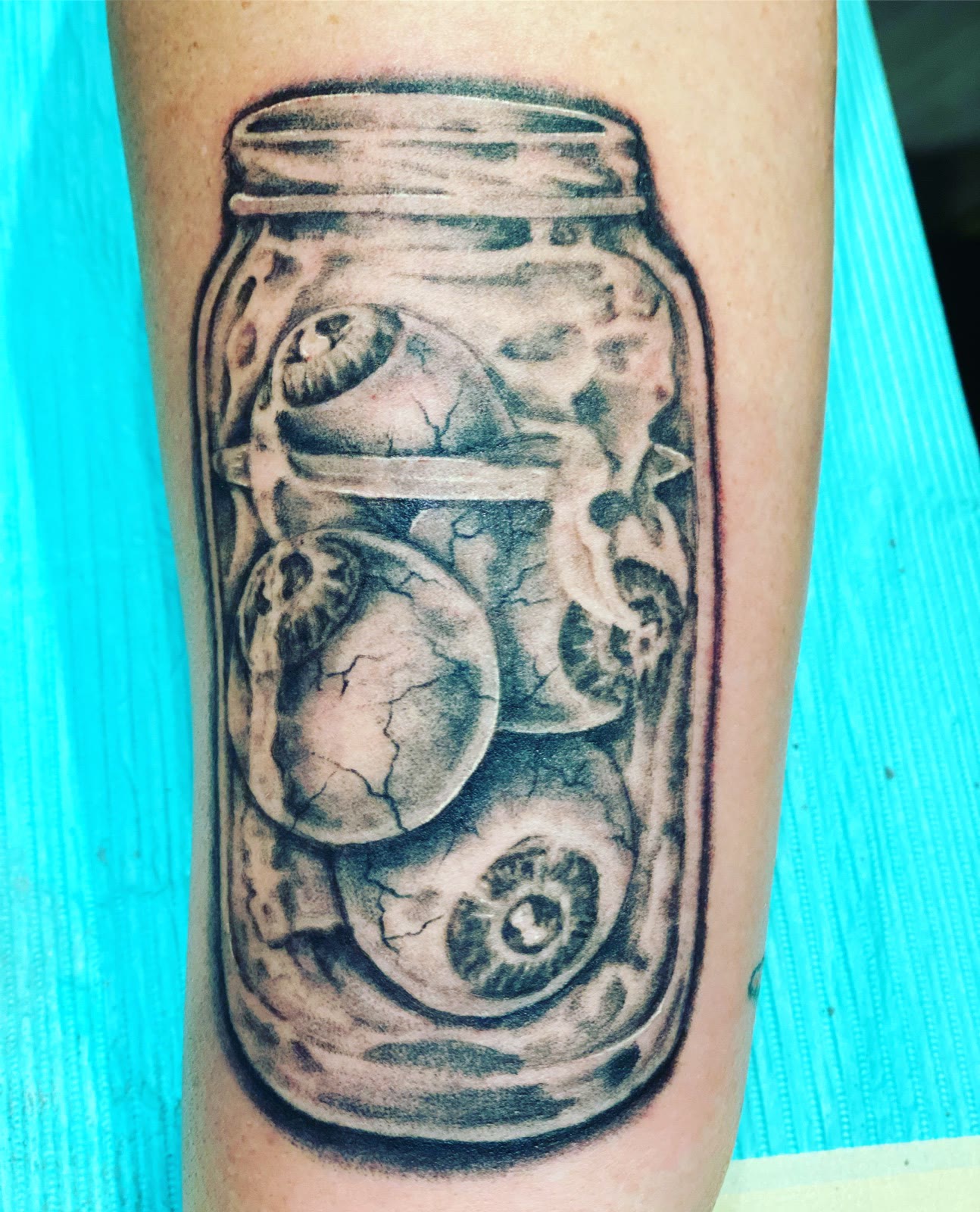
Whip shading is the first thing I name when people ask how I work. It's the technique I get the most questions about in my chair at Club Tattoo inside The LINQ, and it's all over my portfolio. The short version: shading done with just a liner. The longer version is worth a few minutes, because once you know what whip shading looks like, you start seeing every tattoo a little differently.
What whip shading is
Most tattoo shading is done with a mag, a wider grouping of needles made to fill space with smooth, even tone. Whip shading skips the mag. The same kind of needle that pulls a clean outline, a liner, does the shading too. You whip the needle as it leaves the skin, and that motion, not the needle count, is what builds the tone.
How the whip actually works
The name is literal. Instead of dragging the needle at a steady depth, I flick it out of the skin in a small arc, pass after pass. Each pass lands darkest where it begins and fades as the needle lifts away. Stack enough passes and you get stippling: fields of tiny dots that read as smooth tone from a step back and as texture up close.
It's a pressure technique. How hard I land, how fast I whip, how tightly I space the passes, that's the whole control panel. Heavy pressure packs the dots close together and reads deep and dark. A light hand leaves a soft dusting that just settles over the skin.
Whip shading versus mag shading
Neither one is better. They're different tools for different jobs. A mag lays tone down smooth and seamless, almost like an airbrush. Whip shading lands completely different: it has grain, direction, and a little grit. It looks drawn, closer to pencil work than to anything digital. When a piece calls for texture, that grain is exactly the point.
Why it's all black ink
Whip shading, the way I do it, is all black ink. Every tone in the piece comes out of one bottle, from a soft haze to solid black, and the whole range is built dot by dot. There's a reason one of the cards on this site reads Black That Holds. Black ink, whip shaded, is built to stay readable as it settles.
Where you'll see it in my work
Florals are the work I enjoy most, and plenty of them are whip shaded: bouquets where every petal carries its own texture and the shadows feel dusted on instead of painted. It shows up in stranger places too. The jar of eyeballs in my gallery is stipple almost edge to edge, and so is the seahorse. Scroll the gallery and look closely at anything black. If the shading has grain to it, that's the whip.
Is it right for your piece?
If you want shading with texture and character, whip shading is probably the answer, and I'll tell you straight if it isn't. I've been tattooing for fourteen years, and I'd rather turn a piece down than rush it. Most pieces are drawn for the person wearing them, so bring me the idea however it lives in your head. Tell me the placement, the size, and the story behind it, and we'll figure out the rest together.